

Brand Names
Ampicillin is available under various brand names including Omnipen, Polycillin, and Principen. Each brand may vary in its form and concentration. Consult your healthcare provider for specific brand recommendations.
Dosage Forms
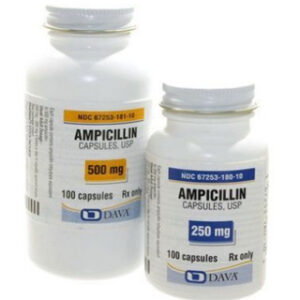
Ampicillin is available in several dosage forms including oral capsules, oral suspension, and injectable forms. The oral capsules are usually available in 250 mg and 500 mg strengths, while the oral suspension comes in varying concentrations. Injectable forms may be suited for hospital settings and severe infections.
Indications
Ampicillin is primarily used to treat bacterial infections such as respiratory tract infections, urinary tract infections, gastrointestinal infections, meningitis, and endocarditis. It is effective against both gram-positive and gram-negative bacteria. Ampicillin is not effective against viral infections.
Mechanism of Action
Ampicillin belongs to the penicillin class of antibiotics and works by inhibiting the formation of bacterial cell walls. By binding to specific penicillin-binding proteins (PBPs), it disrupts the synthesis of the peptidoglycan layer, an essential component of the bacterial cell wall, leading to cell lysis and death.
Dosage Regimen
The exact dosage regimen for ampicillin depends on the type and severity of the infection, the patient’s age, weight, and renal function. For adults, typical oral dosages range from 250 mg to 500 mg every 6 hours. For severe infections, higher doses or intravenous administration may be necessary. Pediatric dosing is usually calculated based on body weight.
Administration Guidelines
Ampicillin should be taken on an empty stomach, ideally 30 minutes before or 2 hours after meals, to enhance absorption. Oral suspension should be shaken well before dosing and accurately measured using a dosing syringe or spoon. Injectable forms should be administered by healthcare professionals.
Pharmacokinetics
Ampicillin is rapidly absorbed from the gastrointestinal tract when taken orally but has a relatively low bioavailability of about 30-55%. It is widely distributed in body tissues and fluids, and it crosses the blood-brain barrier when the meninges are inflamed. Ampicillin is primarily eliminated via the kidneys.
Drug Interactions
Ampicillin can interact with various other medications, altering its effectiveness or increasing the risk of adverse effects. Probenecid can increase ampicillin levels by decreasing renal excretion. Concurrent use of oral contraceptives may lessen their effectiveness. Tetracycline antibiotics can antagonize the bactericidal effect of ampicillin.
Storage Requirements
Store ampicillin capsules and tablets at room temperature, away from moisture and direct light. The oral suspension should be refrigerated and discarded after 14 days if not used. Follow specific storage instructions as provided by the manufacturer.
Precautions
Monitor renal and hepatic function during prolonged therapy. Be cautious in patients with a history of penicillin allergy as cross-reactivity can occur. Use with care in patients with renal impairment, adjusting dosage as needed to prevent accumulation and toxicity.
Contraindications
Ampicillin is contraindicated in patients with a known hypersensitivity to penicillins or cephalosporins. It is also not recommended for use in patients with mononucleosis due to the high incidence of rash. Assess patient history and current medications thoroughly before prescribing.
Adverse Effects
Ampicillin is generally well-tolerated but can cause side effects such as gastrointestinal disturbances (nausea, vomiting, diarrhea), allergic reactions (rash, pruritus, anaphylaxis), and hematologic effects (eosinophilia, anemia). Discontinue use and seek medical attention if severe adverse reactions occur.
Resistance Considerations
Bacterial resistance to ampicillin can develop through various mechanisms, including the production of beta-lactamases, which hydrolyze the antibiotic, and alterations in penicillin-binding proteins. Regular susceptibility testing is recommended to guide effective therapy.
Special Populations
In pregnant women, ampicillin crosses the placenta but is considered safe for use. In lactating mothers, small amounts are excreted in breast milk. Dosage adjustments might be required for elderly patients and those with hepatic impairment to prevent adverse effects.
Clinical Monitoring
Regular monitoring of complete blood count (CBC), liver function tests (LFTs), and renal function tests (RFTs) is advised during extended therapy. Watch for signs of superinfection, particularly in prolonged or high-dose courses.


Reviews
There are no reviews yet.