
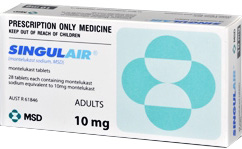
Medication Name: Singulair
Active Ingredient
Singulair contains the active ingredient montelukast sodium. Montelukast is a leukotriene receptor antagonist that helps reduce inflammation and constriction of airways.
Indications for Use
Singulair is primarily indicated for the prophylaxis and chronic treatment of asthma in adults and pediatric patients. It is also used for the relief of symptoms of seasonal allergic rhinitis (hay fever) and perennial allergic rhinitis. Additionally, it is prescribed to prevent exercise-induced bronchoconstriction in patients aged 6 years and older.
Dosage Forms and Strengths
Singulair is available in tablet form, chewable tablets, and oral granules. The standard strengths are 10 mg tablets for adults, 4 mg and 5 mg chewable tablets for pediatric use, and 4 mg oral granules for young children.
Administration Guidelines
Singulair should be taken once daily in the evening for asthma, or in the morning or evening for allergic rhinitis. It can be taken with or without food. Chewable tablets should be chewed thoroughly before swallowing. The oral granules can be administered directly in the mouth or mixed with a spoonful of soft food.
Mechanism of Action
Montelukast works by inhibiting the cysteinyl leukotriene CysLT1 receptor, preventing leukotrienes from causing inflammation, bronchoconstriction, mucus production, and other signs of asthma and allergic rhinitis.
Pharmacokinetics
After oral administration, montelukast is rapidly absorbed, with peak plasma concentrations occurring 2-4 hours after dosage. The bioavailability of the 10 mg tablet is 64%. Montelukast is extensively metabolized in the liver, predominantly via the cytochrome P450 enzyme system. The elimination half-life of montelukast ranges from 2.7 to 5.5 hours in healthy adults.
Drug Interactions
Montelukast may interact with other medications metabolized by the cytochrome P450 enzyme system, such as phenobarbital and rifampin, reducing its plasma levels. Conversely, medications that inhibit CYP3A4, like itraconazole, may increase the levels of montelukast. It is important to monitor for possible interaction with other drugs the patient might be taking.
Clinical Efficacy
Clinical trials have demonstrated the efficacy of Singulair in reducing daytime and nighttime asthma symptoms, improving peak expiratory flow rates, and lowering the frequency of asthma exacerbations. Furthermore, it has proven effective in alleviating the symptoms of allergic rhinitis, including nasal congestion, rhinorrhea, sneezing, and itching.
Patient Population
Singulair is approved for use in adults and pediatric patients aged 12 months and older with asthma, and those aged 6 months and older with allergic rhinitis. Special caution is advised for patients with pre-existing liver conditions, as well as for those who are pregnant or breastfeeding.
Side Effects
Common side effects of Singulair include headache, upper respiratory infection, fever, and abdominal pain. Some patients may experience neuropsychiatric events such as agitation, depression, and suicidal thoughts. Serious adverse reactions can include liver enzyme abnormalities and systemic eosinophilia.
Monitoring Requirements
Patients taking Singulair should be monitored for hepatic function at baseline and periodically thereafter, particularly if they present with symptoms suggestive of liver dysfunction. Mental health should be regularly assessed due to the risk of neuropsychiatric events. Efficacy in symptom control should also be periodically reviewed.
Special Populations
In pediatric patients, dosing should be adjusted according to age and weight. Geriatric patients may require dose adjustments due to potential increased sensitivity. Lactation and pregnancy considerations must be taken into account, as montelukast is excreted in milk and crosses the placenta.
Storage Conditions
Singulair tablets and chewable tablets should be stored at room temperature, between 20°C to 25°C (68°F to 77°F). Oral granules should be used within 15 minutes of opening the packet, and any unused portion should be discarded.
Costs and Insurance Coverage
The cost of Singulair varies depending on the dosage form and quantity. It is often covered by insurance plans, though prior authorization may be required. Generic versions (montelukast) are available, providing a cost-effective alternative.

Reviews
There are no reviews yet.