
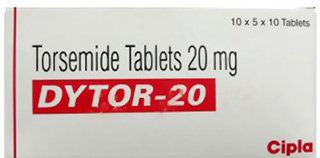
Medication Overview
Torsemide is a loop diuretic primarily used for the treatment of edema associated with congestive heart failure, chronic renal failure, and hepatic cirrhosis. It is also prescribed to manage high blood pressure.
Pharmacologic Category
Torsemide is classified as a sulfonylurea derivative and belongs to the category of loop diuretics. These medications function by inhibiting the Na+/K+/2Cl- cotransporter in the thick ascending limb of the loop of Henle, promoting diuresis.
Clinical Indications
Torsemide is primarily indicated for the treatment of edema related to heart failure, renal disease, and liver cirrhosis. Additionally, it is used to manage hypertension either alone or in combination with other antihypertensive agents.
Mechanism of Action
Torsemide operates by inhibiting the reabsorption of sodium and chloride in the kidneys. This inhibition occurs primarily in the thick ascending limb of the loop of Henle, leading to increased urine output and reduced fluid retention.
Dosage Forms
Torsemide is available in oral tablets and intravenous injection formulations. The oral tablets come in strengths of 5 mg, 10 mg, 20 mg, and 100 mg, while the intravenous form is provided in pre-dosed ampules or vials.
Standard Dosing Guidelines
For edema, the usual initial dose is 10-20 mg orally once daily, with the possibility of increasing it to 200 mg daily based on patient response. For hypertension, the starting dose is typically 2.5 mg to 5 mg once daily, adjustable depending on the efficacy.
Administration Advice
Torsemide should be taken with or without food. When administered intravenously, it should be given slowly over 1-2 minutes. Consistency in the timing of doses can aid in maintaining stable medication levels in the body.
Pharmacokinetics Overview
Torsemide has a rapid onset of action, usually within 1 hour for oral administration and within minutes for intravenous injection. It is extensively metabolized in the liver and has an elimination half-life of approximately 3.5 hours. About 80% of the drug is excreted via urine.
Drug-Drug Interactions
Torsemide can interact with various medications, including aminoglycoside antibiotics, nonsteroidal anti-inflammatory drugs (NSAIDs), and other antihypertensive agents. Combining it with these drugs may necessitate dosage adjustments to avoid adverse effects.
Monitoring Parameters
Regular monitoring includes checking electrolyte levels, kidney function (serum creatinine and BUN), blood pressure, and body weight. Monitoring is essential to assess the effectiveness of the medication and to identify potential complications early.
Common Adverse Effects
Frequent side effects include increased urination, electrolyte imbalances (hypokalemia, hyponatremia), dizziness, and dehydration. Less common but significant effects include hyperglycemia, hyperuricemia, and hearing impairment, particularly with high doses.
Special Population Considerations
In elderly patients, dose adjustments may be necessary due to increased susceptibility to the drug’s effects. For pediatric use, the safety and efficacy profiles are not fully established. In patients with liver dysfunction, lower doses may be recommended to reduce the risk of adverse reactions.
Contraindications
Torsemide is contraindicated in individuals with anuria, known hypersensitivity to torsemide or sulfonylureas, and severe hepatic coma. It should be used cautiously in patients with electrolyte imbalances or a history of gout.
Patient Counseling Points
Patients should be advised to maintain adequate hydration and to report any unusual symptoms, such as muscle cramps, severe dizziness, or extreme fatigue. Educating them on the importance of regular blood tests to monitor electrolyte levels can enhance medication adherence and overall treatment success.


Reviews
There are no reviews yet.