
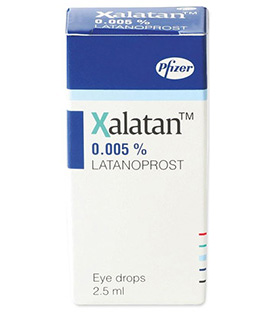
Medication Overview
Xalatan (latanoprost) is a prostaglandin analog indicated for the reduction of elevated intraocular pressure (IOP) in patients with open-angle glaucoma or ocular hypertension. It decreases IOP by increasing the outflow of aqueous humor through the trabecular meshwork and uveoscleral pathways.
Active Ingredient
The active ingredient in Xalatan is latanoprost. Latanoprost is a synthetic prostaglandin F2α analog which effectively reduces intraocular pressure by enhancing uveoscleral outflow. It exhibits high potency at low concentrations.
Mechanism of Action
Xalatan works primarily by increasing the outflow of aqueous humor via the uveoscleral pathway. This decreases intraocular pressure, which can potentially reduce the risk of optic nerve damage in glaucoma patients. The drug gets hydrolyzed to the active form, latanoprost acid, in the cornea.
Indications and Usage
Xalatan is prescribed for the treatment of elevated intraocular pressure in patients with open-angle glaucoma and ocular hypertension. It has been proven effective in lowering IOP in various clinical studies, thereby reducing the potential for optic nerve damage and loss of vision.
Administration Details
Xalatan is administered as an ophthalmic solution. The recommended dosage is one drop in the affected eye(s) once daily in the evening. Consistency in timing of administration is crucial for maintaining stable intraocular pressure levels.
Storage Instructions
Xalatan should be stored in a refrigerator at 2°C to 8°C (36°F to 46°F) before opening. After the bottle is opened, it may be stored at room temperature up to 25°C (77°F) for a maximum of six weeks. Ensure the bottle is tightly closed when not in use.
Effects on Eye Color
One unique side effect of Xalatan is the potential for gradual change in eye color. This occurs due to increased brown pigmentation of the iris and is considered permanent. This side effect is more common in patients with mixed-color irides, such as green-brown, yellow-brown, and blue-brown.
Potential Side Effects
Possible side effects of Xalatan include eye redness, discomfort, increased iris pigmentation, blurred vision, and eyelid skin darkening. While most side effects are mild and transient, persistent adverse reactions should be discussed with a healthcare provider.
Contraindications
Xalatan is contraindicated in patients with hypersensitivity to latanoprost, its components, or other prostaglandin analogs. Patients with active intraocular inflammation or known risk factors for macular edema should use Xalatan with caution under medical supervision.
Drug Interactions
Xalatan can interact with other eye medications containing thimerosal. If used concurrently, administer the drugs at least five minutes apart. It is recommended to avoid using multiple prostaglandin analogs concomitantly due to the risk of IOP fluctuations.
Precautions in Pregnancy
Limited data is available on the use of Xalatan in pregnant women. Animal studies have shown reproductive toxicity. Consequently, Xalatan should be used during pregnancy only if the potential benefit outweighs the potential risk to the fetus.
Nursing Considerations
It is unknown whether latanoprost is excreted in human breast milk. Caution is advised when administering Xalatan to nursing mothers, and a risk-benefit assessment should be performed by a healthcare provider.
Pediatric Use
The safety and efficacy of Xalatan in pediatric patients have not been firmly established. While some clinical data exist, the prescription of Xalatan in children should be carefully considered, and used only if the benefits outweigh the risks.
Effects on Driving
Temporary blurred vision after the administration of Xalatan can impair the ability to drive or use machinery. Patients should wait until their vision clears before engaging in such activities.
Usage in Liver Impairment
Patients with hepatic impairment do not generally require dosage adjustments of Xalatan. Nonetheless, careful monitoring and consultation with a healthcare provider are recommended to ensure appropriate management.
Usage in Renal Impairment
Xalatan has not been extensively studied in patients with renal impairment. No dosage adjustment is typically necessary; however, monitoring kidney function periodically is suggested in long-term treatment scenarios.
Handling Instructions
Avoid contamination by not allowing the dropper tip to touch any surfaces, including the eyes or hands. After administration, press a finger against the inner corner of the eye for 1-2 minutes to prevent systemic absorption.
Missed Dosage Protocol
If a dose of Xalatan is missed, administer it as soon as remembered. However, if it is nearly time for the next dose, skip the missed dose. Do not double the doses to make up for the missed application.
Disposal Guidelines
Dispose of Xalatan as per the local guidelines for pharmaceutical waste. Do not flush the medication down the toilet or pour it into a drain unless instructed to do so.
Packaging Information
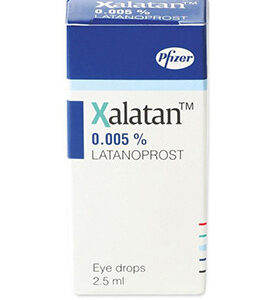
Xalatan is commonly supplied in a sterile bottle containing Ophthalmic Solution 0.005% (50mcg/mL). The usual package size includes a single 2.5 mL bottle. Packaging may vary based on regional regulations and distributor practices.
Inactive Ingredients
Inactive ingredients in Xalatan include sodium chloride, sodium dihydrogen phosphate monohydrate, disodium phosphate anhydrous, and water for injection. These components aid in stabilizing the formulation and ensuring drug delivery efficacy.
Clinical Trials Summary
Clinical trials have demonstrated that Xalatan significantly reduces intraocular pressure by approximately 6-8 mmHg. The trials have shown its superiority over timolol in lowering IOP during night-time measurements.
Patient Monitoring
Healthcare providers should regularly monitor intraocular pressure and overall eye health of patients using Xalatan. Routine follow-ups are essential to ensure optimal therapeutic outcomes and promptly manage any adverse effects.
Mechanism Elucidation
The pharmacological action of Xalatan involves hydrolysis into latanoprost acid. This results in increased aqueous humor outflow, thereby effectively reducing intraocular pressure. The peak concentration in the aqueous humor is achieved approximately 2 hours post-administration.


Reviews
There are no reviews yet.